
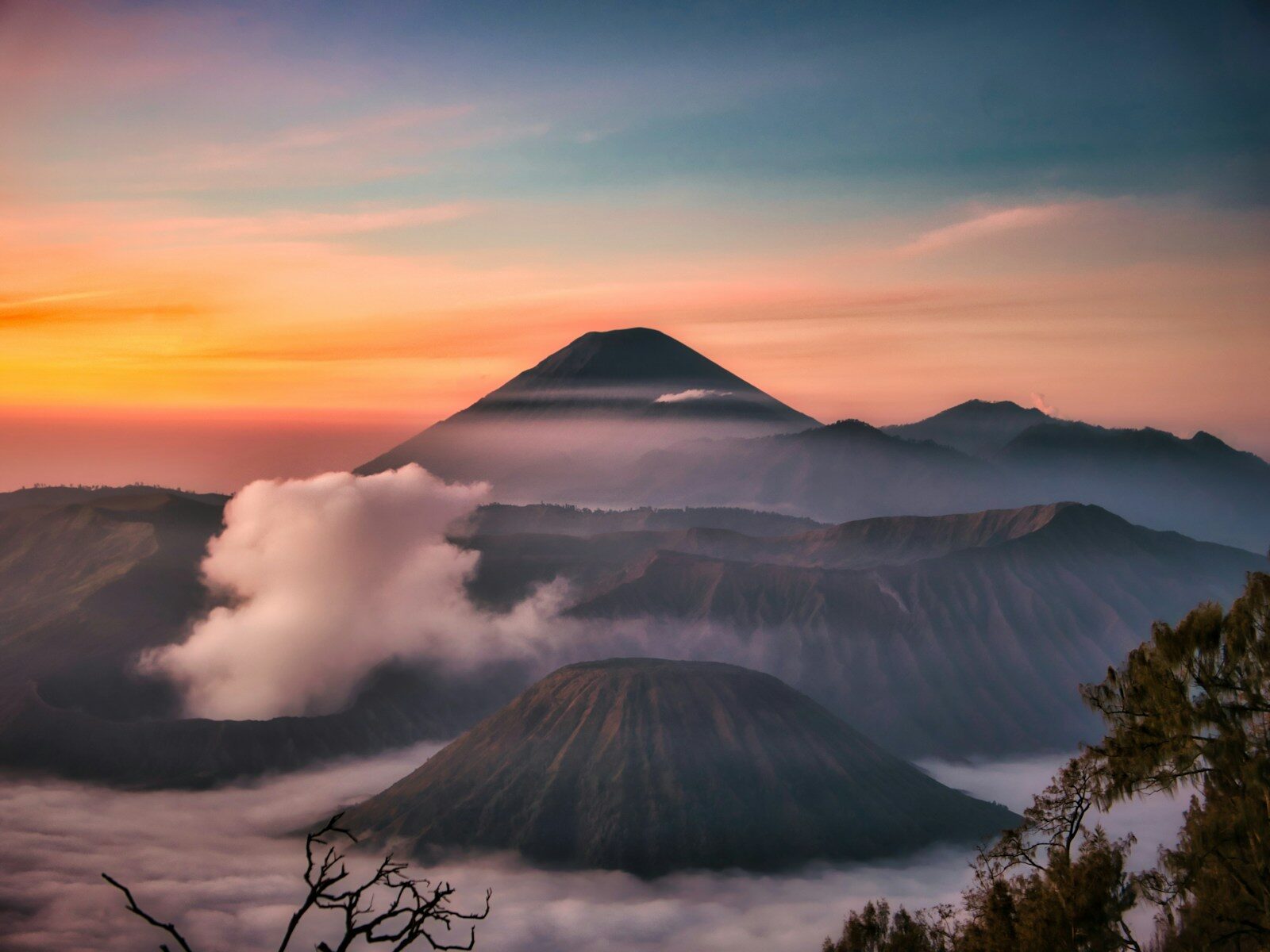
Indonesia Travel Guide
Indonesia is the world’s largest archipelago, stretching across more than 17,000 islands between the Indian and Pacific oceans, from the western tip of Sumatra to the eastern edge of Papua, with landscapes ranging from active volcanoes and dense rainforests to white-sand beaches and vibrant coral reefs.
The country’s history spans ancient Buddhist and Hindu kingdoms such as Srivijaya and Majapahit, the construction of monumental temples like Borobudur and Prambanan, centuries of spice trade that drew European colonial powers, and eventual independence in 1945 after Dutch rule and Japanese occupation during World War II.
Today Indonesia is the world’s fourth most populous nation and home to over 300 ethnic groups and 700 languages, blending Islamic faith with indigenous traditions, vibrant street markets, elaborate ceremonies, and a cuisine celebrated for its bold spices and regional diversity. Travelling here means exploring a nation of extraordinary cultural and natural richness, where every island tells a different story.
- 🌋 Volcanic landscapes
- 🏝 17,000 islands
- 🛕 Ancient temples
- 🍛 Spice heritage
Indonesia has a tropical climate with two main seasons: dry and wet. Weather patterns vary slightly across the archipelago, but most regions follow a similar seasonal rhythm.
- The dry season (May to September) brings sunny skies, lower humidity, and ideal conditions for outdoor activities, beach visits, and temple exploration across most of the country.
- The wet season (October to April) sees heavy but usually short tropical downpours, lush green landscapes, and fewer tourists, though some remote areas may become harder to access.
- Shoulder months (April, May, October, November) offer a balance of good weather, lower prices, and reduced crowds, ideal for trekking and wildlife watching.
- A vast and diverse country requiring internal flights or long ferry journeys to move between major islands like Java, Bali, Sumatra, Sulawesi, and Komodo.
- A predominantly Muslim nation (87% of the population) where Islamic values coexist with Hindu traditions in Bali and animist beliefs in remote regions.
- Warm hospitality and a relaxed pace of life, though cities like Jakarta can be chaotic and traffic-heavy.
- Rich culinary traditions shaped by centuries of spice trade, with bold flavours balancing sweet, salty, sour, and fiery heat.
Dry Season
May to September offers the best overall weather, with sunny skies, calm seas, and perfect conditions for diving, trekking, and exploring temples and beaches.
Wet Season
October to April brings daily downpours, greener landscapes, fewer crowds, and lower prices, though some outdoor activities may be affected by heavy rain.
Shoulder Season
April, May, October, and November provide a sweet spot with good weather, reduced tourist numbers, and great conditions for hiking and wildlife encounters.
Festival Season
Nyepi (Balinese New Year) in March brings a day of silence across Bali, while Ramadan and Eid celebrations vary annually and shape the rhythm of life across the archipelago.
- Nasi Goreng: Indonesia’s national dish, fried rice stir-fried with sweet soy sauce, shallots, garlic, shrimp paste, and chili, served with egg, chicken, or prawns.
- Rendang: slow-cooked beef curry from West Sumatra, simmered in coconut milk and spices until tender and deeply flavourful, often considered one of the world’s best dishes.
- Satay (Sate): skewered grilled meat (chicken, beef, lamb, or goat) served with rich peanut sauce, a street food staple across the archipelago.
- Gado-Gado: mixed vegetable salad with tofu, tempeh, hard-boiled eggs, and prawn crackers, dressed in a thick peanut sauce.
- Mie Goreng: stir-fried noodles with vegetables, egg, and meat or seafood, seasoned with sweet soy sauce and chili.
- Nasi Campur: mixed rice plate with small portions of various dishes including meat, vegetables, tempeh, sambal, and crackers.
- Soto: aromatic soup with chicken or beef, rice noodles, hard-boiled eggs, and fresh herbs, varying by region.
- Nasi Kuning: yellow turmeric rice served during celebrations, often shaped into a cone (tumpeng) and surrounded by side dishes.
- Ayam Goreng: crispy fried chicken marinated in turmeric, garlic, and coriander, a beloved everyday meal across Indonesia.
- Sambal and rice: not a single dish, but the pairing of fiery chili paste (sambal) with steamed rice is central to Indonesian food culture, with hundreds of regional sambal variations.
- Lightweight, breathable clothing suitable for tropical heat and humidity.
- Modest clothing for temple visits and rural areas: covered shoulders, long trousers or skirts.
- Comfortable walking shoes and sandals for temple steps, uneven paths, and beach exploration.
- Sun protection: high-SPF sunscreen, sunglasses, and a wide-brimmed hat.
- Insect repellent, especially for jungle areas and rural villages.
- Light rain jacket or compact umbrella during the wet season.
- Sarong for temple entry (often required) and beach use.
- Reusable water bottle, basic first-aid kit, and any personal medications.
- Borobudur, the world’s largest Buddhist temple, was built in the 8th century during the Sailendra Dynasty on Java, abandoned after the 14th-century decline of Hindu-Buddhist kingdoms, and rediscovered under volcanic ash in 1814 by the British.
- Prambanan, Java’s largest Hindu temple complex, was built in the 9th century and dedicated to the Trimurti (Brahma, Vishnu, and Shiva), showcasing the island’s religious diversity before the spread of Islam.
- The ancient kingdom of Majapahit (1293–1527) was one of the most powerful empires in Southeast Asian history, controlling much of present-day Indonesia, Malaysia, and parts of the Philippines at its height.
- European powers arrived in the 16th century to control the lucrative spice trade, with the Dutch establishing the Dutch East India Company (VOC) in 1602 and eventually colonizing the archipelago for over 300 years.
- Indonesia declared independence on 17 August 1945, just days after Japan’s surrender in World War II, though the Dutch did not officially recognize independence until 1949 after four years of armed and diplomatic struggle.
- The Komodo dragon, the world’s largest living lizard, is found only in Indonesia’s Komodo National Park and surrounding islands, and can grow up to 3 meters long.
- Indonesia is the world’s most populous Muslim-majority country, yet Bali remains predominantly Hindu, and regions like Papua and North Sulawesi are largely Christian, reflecting the archipelago’s extraordinary diversity.
- The country sits on the Pacific Ring of Fire and has more than 130 active volcanoes, making it one of the most volcanically active regions on Earth.
Teekonda tip
Indonesia’s scale demands selectivity. Don’t try to see everything—choose one or two regions (Java and Bali, or Komodo and Flores, for example), travel slowly, embrace local transport, and leave room for spontaneity. The country rewards those who take time to connect with communities, not just tick off landmarks.