Six Hours of Daylight, and a City Built for It
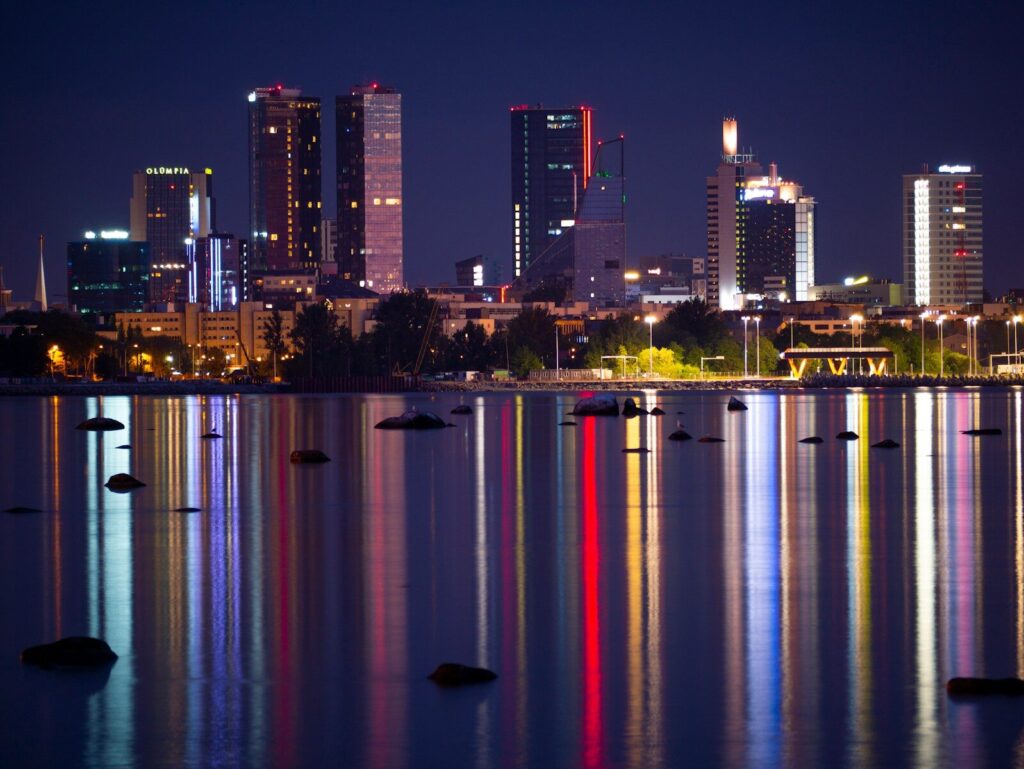
On the shortest day of the year, 21 December, the sun rises over Tallinn at 09:18 and sets at 15:21 (sunrisesunsettime.org, 2026). That is roughly six hours of daylight, most of it low and golden, followed by a dusk that seems to last all afternoon.
The cold is real but rarely dramatic. Average air temperature at the Tallinn-Harku station is -0.9°C in December, -2.9°C in January and -3.6°C in February, the coldest month (Estonian Environment Agency, climate normals 1991-2020). This is a maritime winter: damp, often grey, sometimes snowy, seldom extreme.
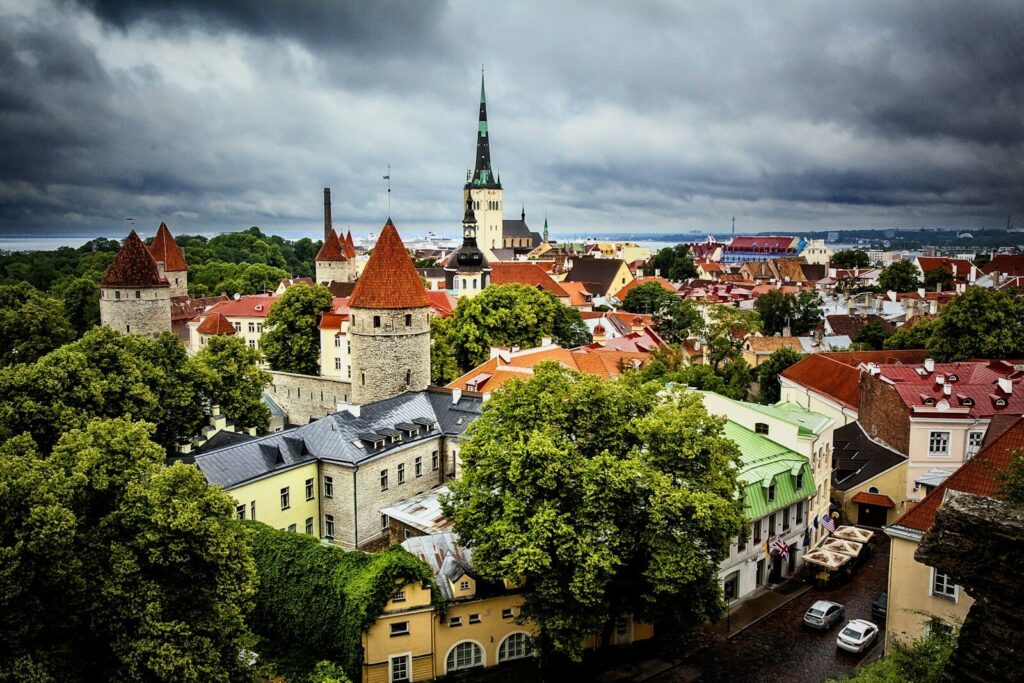
What makes it work is the architecture of the place. Tallinn’s historic centre is a medieval trading town that grew as a major centre of the Hanseatic League and kept its original layout, which earned it UNESCO World Heritage status in 1997 (UNESCO World Heritage Centre, 1997). Narrow lanes, thick limestone walls and small lit windows are winter design, whatever the century.
The Old Town After Four O’Clock
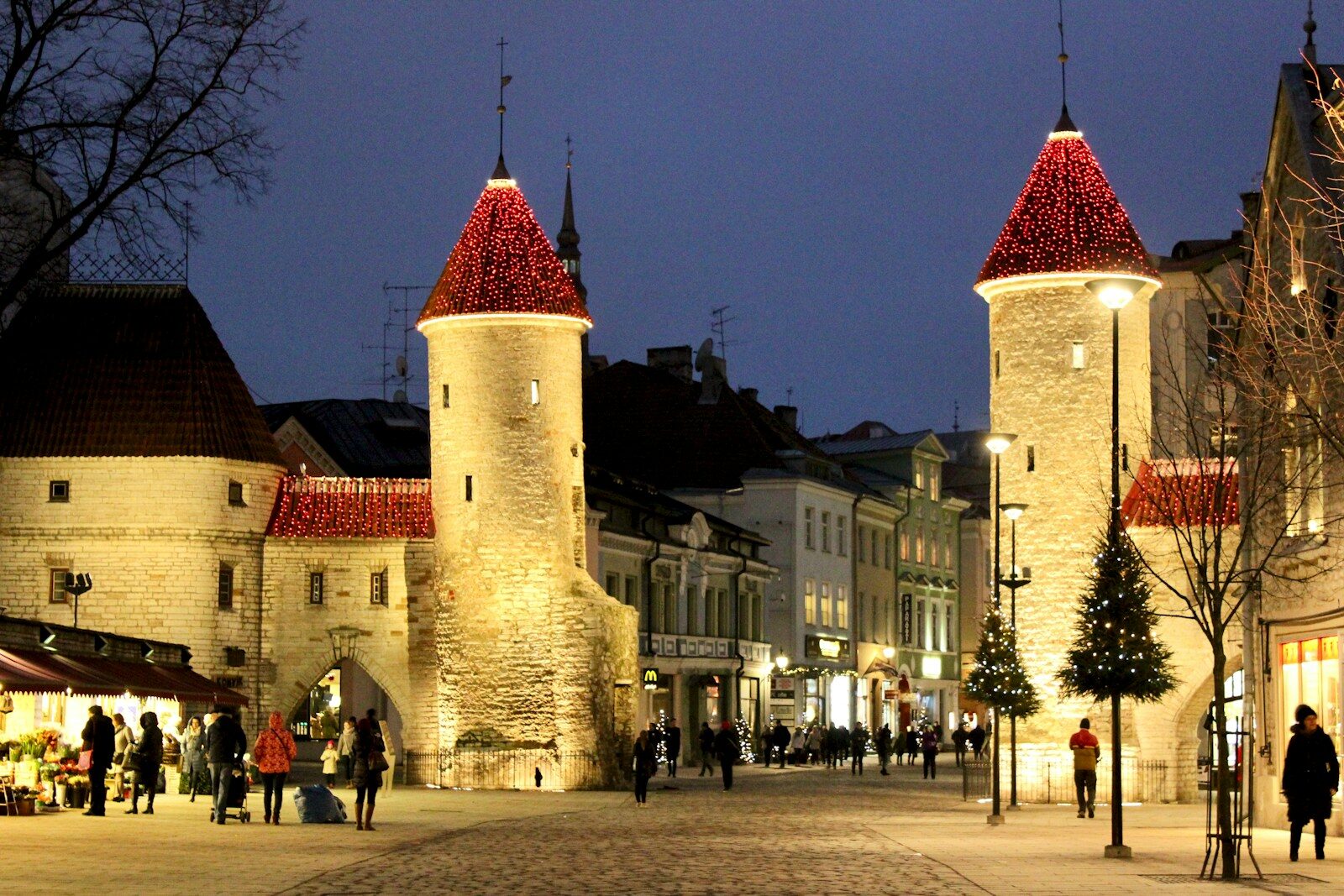
In summer the Old Town belongs to day visitors. In winter it belongs to the evening, and the evening starts mid-afternoon. Lamps come on along the lanes, café windows steam up, and the towers of the city wall stand out against a sky that turns dark blue before it turns black.
The centre of it is Town Hall Square. The Tallinn Christmas Market runs there from 20 November 2026 to 6 January 2027 (Visit Estonia, 2026). According to the national tourism board, a Christmas tree has been set up in the square since 1441, a tradition it describes as the first public Christmas tree in Europe (Visit Estonia, 2026). The claim is hard to prove and easy to enjoy.
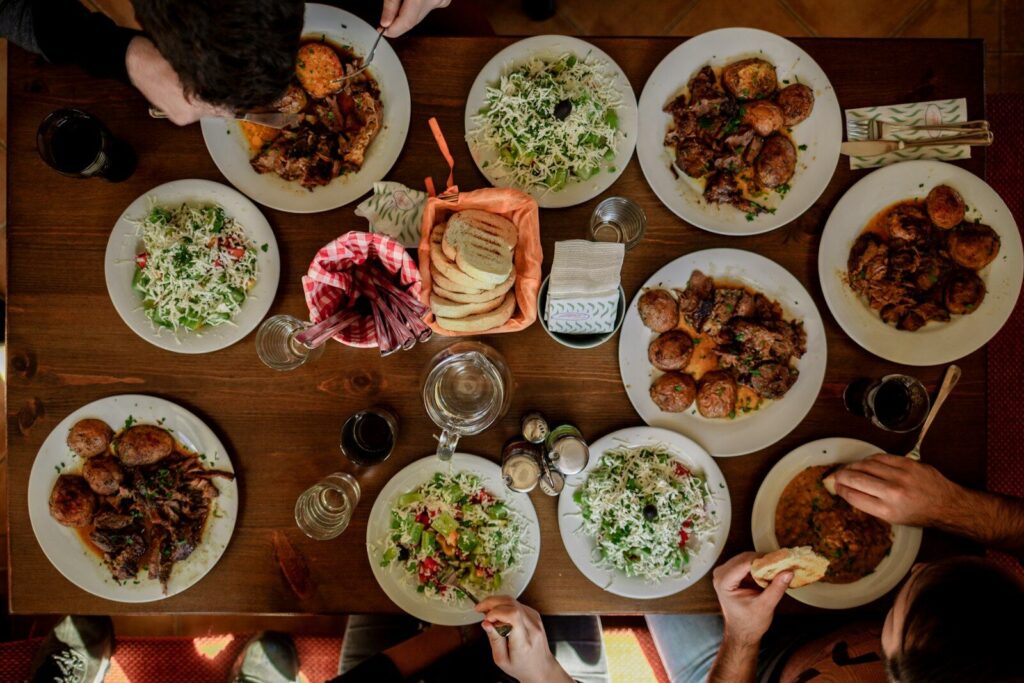
The food is better evidence of where you are: black pudding, sour cabbage, gingerbread and hot spiced drinks (Visit Estonia, 2026). After 6 January the stalls go and the square empties. For many travellers that is the better moment, when the same streets are quiet and the city feels lived in again.
Heat, Then Cold: The Sauna Habit
Estonians do not endure winter so much as alternate it. The pattern is simple: heat until you cannot stay, then cold until you cannot stay, then repeat. Around one in five Estonians practises winter swimming, and the season runs from November to March, when the sea is at about 1°C (Visit Estonia, accessed October 2026).
In Tallinn the habit is easy to join. At Noblessner, a former shipyard turned waterfront district, the igloo-shaped saunas of Iglupark sit beside a ladder that goes straight into the sea (Visit Estonia, accessed October 2026). Winter swimmers also gather behind the Seaplane Harbour museum and at Linnahall, the vast concrete hall on the shore (Visit Estonia, accessed October 2026).
Newcomers should take the local advice seriously: swim with a friend, breathe slowly, do not jump in over your head, keep a woolly hat on, and listen to your body rather than the clock (Visit Estonia, accessed October 2026). The reward is disproportionate. Few things make a dark afternoon feel shorter.
Indoors, by Design
A city with six hours of light invests in its interiors, and Tallinn’s museums are the proof. Kumu, the main building of the Art Museum of Estonia, is the largest exhibition venue in the country (Visit Estonia, accessed October 2026). It is the natural first stop for anyone who wants to see how the country pictures itself.
On the waterfront, the Estonian Maritime Museum at Seaplane Harbour fills historic seaplane hangars with nearly 200 authentic exhibits (Visit Estonia, accessed October 2026). In Kadriorg, a baroque palace built by Tsar Peter the Great houses the only museum in Estonia dedicated to early European and Russian art (Visit Estonia, accessed October 2026).
For something contemporary, Fotografiska Tallinn stands in the middle of Telliskivi Creative City, the former industrial quarter that now holds studios, shops and restaurants (Visit Estonia, accessed October 2026). A winter day here has a natural shape: outdoors while there is light, indoors when it goes.
Planning a Winter Visit
- Choose your month. Late November to early January brings the Christmas market, which runs until 6 January 2027 (Visit Estonia, 2026). January and February are colder, with February averaging -3.6°C, and far quieter (Estonian Environment Agency, climate normals 1991-2020).
- Plan around the light. With sunrise after nine and sunset before half past three in late December (sunrisesunsettime.org, 2026), keep walks, viewpoints and the waterfront for the middle of the day.
- Book the sauna. Private saunas on the waterfront work by reserved time slots, so plan them like a restaurant table.
- Dress for damp cold. Layers, a windproof outer shell and shoes with a good grip matter more than a heavy coat.
- Leave gaps. The best of a Tallinn winter is unplanned: a long lunch, a second coffee, a museum room with nobody else in it.
Tallinn does not ask you to wait for better weather. It suggests that the dark, handled well, is a season worth travelling for.
Teekonda Magazine is published in Tallinn by Teekonda Europe OÜ. For practical details on the city, read our Tallinn Travel Guide.
Sources
- Sunrise and sunset times in Tallinn, December 2026, sunrisesunsettime.org
- Air temperature, climate normals 1991-2020, Estonian Environment Agency
- Historic Centre (Old Town) of Tallinn, UNESCO World Heritage Centre
- Tallinn Christmas Market, Visit Estonia
- Winter swimming, Estonia’s natural mood booster, Visit Estonia
- The best museums in Tallinn and other must-see attractions, Visit Estonia
All sources consulted on 5 October 2026.