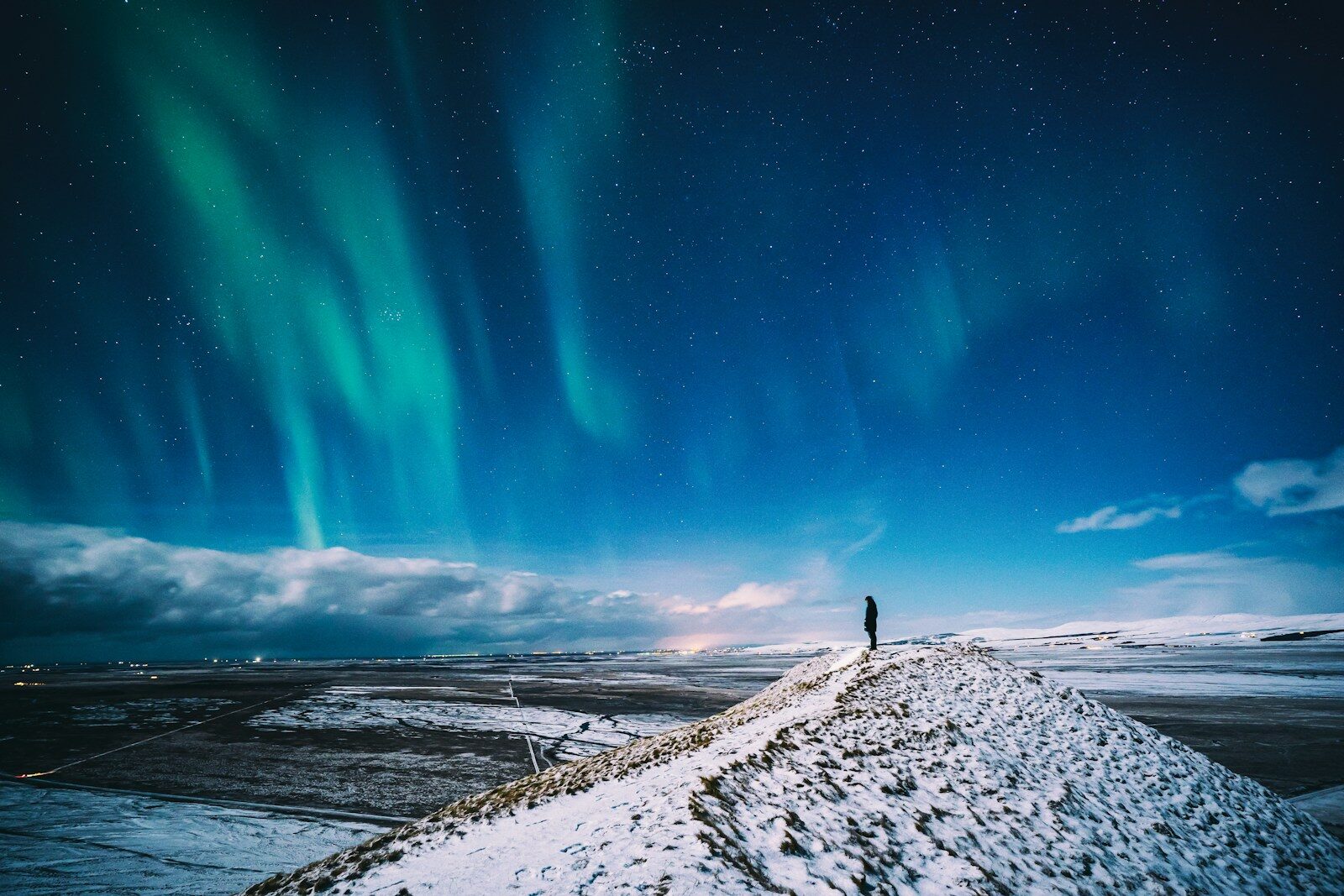
In late December the sun rises over Reykjavík a little before half past eleven and sets around half past three. Four hours of daylight, more or less, and the sun never climbs far above the horizon. For many travellers that sounds like a reason to stay away. It is the opposite. Winter is when Iceland is at its most theatrical: low light that turns the whole day into a long sunrise and sunset, waterfalls wrapped in ice, black beaches under snow, and, on clear nights, the northern lights.
The trick is to stop thinking of winter as the dark season and start thinking of it as the season of light that has to be chased. Here is what that means in practice.
How much daylight is there, really?
Less than you are used to, but more than the reputation suggests. Around the winter solstice Reykjavík gets about four hours of sun. By early January it is close to four and a half, and the days lengthen fast after that: by mid-February the sun is up from about half past nine to six in the evening, more than eight hours. Further along the south coast, around Vík, the days are a little longer than in the capital.
What the numbers do not capture is the quality of that light. With the sun so low, mornings slide into a soft golden glow that can last for hours, and twilight stretches long before sunrise and after sunset. A winter day in Iceland is short, but it is rarely dull. Plan the outdoor highlights for the middle of the day, and treat the dark hours as time for the aurora, the hot pools and long dinners.
The northern lights: patience, clear skies and a good forecast
The aurora is the reason many people come in winter, and it is worth being honest about it: it cannot be booked. You need two things at once, solar activity and dark, at least partly clear skies. The Icelandic Met Office publishes a free aurora forecast that rates expected activity on a scale from 0 to 9 and, just as importantly, shows a cloud cover map for the coming days. Locals will tell you to watch the clouds first and the activity number second.
The darkest months, from late autumn to early spring, give the longest window to look. Get away from the lights of Reykjavík, dress as if you will be standing still for an hour, because you probably will, and give it more than one night. The sky over a snowy ridge at two in the morning, when the green finally starts to move, is one of those moments that stays with you.
The south coast in winter
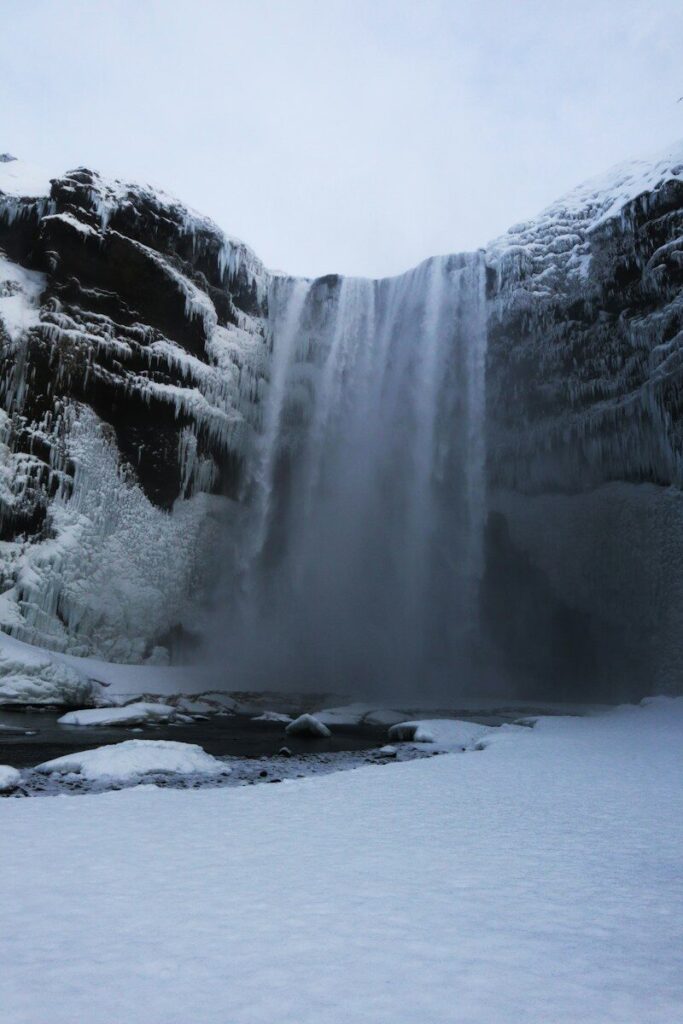
The ring road east of Reykjavík packs an extraordinary amount into a short distance. Seljalandsfoss, the waterfall you can usually walk behind in summer, becomes a curtain of spray and ice. A little further on, Skógafoss drops about sixty metres off the old coastline, and in winter its edges freeze into columns of white.
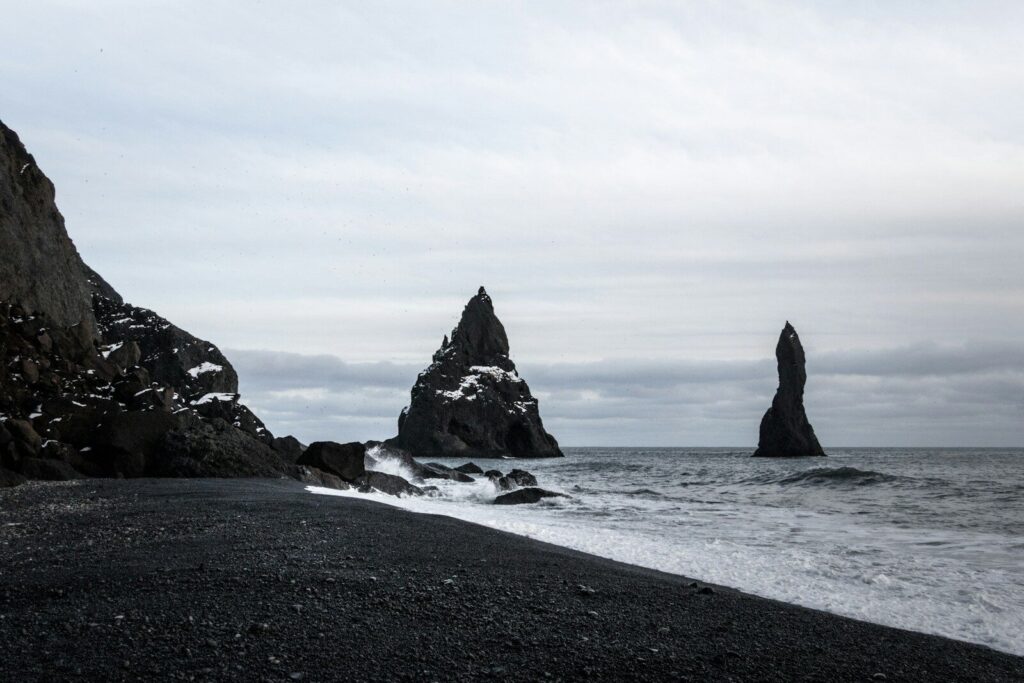
Then comes Reynisfjara, the black sand beach near Vík, with its basalt columns and the Reynisdrangar sea stacks rising out of the Atlantic. It is beautiful and genuinely dangerous. The beach is known for sneaker waves that surge far further up the sand than the waves before them, with no warning. Since 2022 a warning light at the entrance, linked to a wave forecasting system developed by the Icelandic Road and Coastal Administration, shows yellow or red depending on conditions. Respect it, stay well back from the waterline and never turn your back on the sea.
Inside the glacier
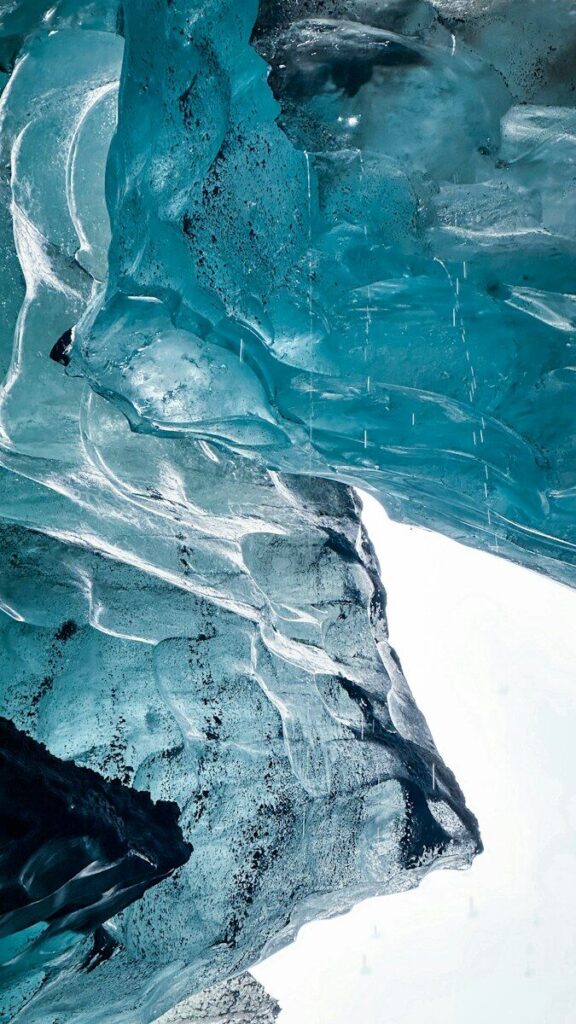
Winter opens something summer cannot: the natural ice caves of Vatnajökull, Iceland’s largest glacier. The caves are generally visited from about November to March, when the cold keeps the ice stable enough to enter. They are not fixed attractions. New caves form every season as the glacier moves and melts, so the one you visit may look nothing like last year’s photographs.
They are also not a place to explore alone. Conditions inside a glacier change constantly, and visits should only happen with a qualified glacier guide who checks the ice and the weather on the day. Nearby, the icebergs of Jökulsárlón drift towards the sea, and the chunks that wash up on the black sand of Diamond Beach catch whatever light the short day offers.
A midwinter feast: Þorrablót
Iceland has its own way of getting through the dark. Þorri, a month of the old Icelandic calendar, begins in the second half of January and lasts about a month, and with it comes Þorrablót, the midwinter feast. Modern celebrations go back to the second half of the nineteenth century; the first known one was reportedly organised by Icelandic students in Copenhagen in 1873.
The food is the point, and it is not for everyone: fermented shark, singed sheep’s head, blood pudding and liver sausage, alongside more approachable smoked lamb, dried fish and dark rye bread, usually washed down with Brennivín. Many Reykjavík restaurants serve a Þorri platter during the season. Try it once. You will have a story either way.
Travelling well in the dark season
Winter in Iceland rewards preparation. Weather changes quickly and roads can close at short notice, so check road conditions on the Icelandic Road and Coastal Administration’s website and the SafeTravel service before any drive. Layers matter more than one heavy coat: thermal base layers, a warm mid-layer, a windproof and waterproof shell, good boots with grip, a hat and gloves you can still use your phone with.
Above all, leave room in the plan. The aurora might appear on the one night you planned to go to bed early; a road might close and turn a driving day into a long lunch in Vík. The travellers who enjoy Iceland in winter most are the ones who accept that the country sets the pace.
Why go in winter at all
Because it is a different country. Fewer people, softer light, landscapes that look carved rather than grown, and evenings that end with a hot pool under a dark sky. Iceland in summer is spectacular; Iceland in winter is intimate. The light is scarce, and that is exactly what makes every hour of it count.
If you want to see it with a small group and a Tour Leader who knows the coast, Teekonda has two winter departures: 2 January 2027 · 14 February 2027
For everything else, start with our Iceland travel guide.
Sources: daylight times calculated from standard astronomical data for Reykjavík and Vík; Icelandic Met Office (aurora forecast); Iceland Review and Reykjavík Excursions (Reynisfjara warning system); IceCave.org (Vatnajökull ice caves); Icelandair (Þorrablót).